It's 2026, and after a decade of activism, industry reports reveal an uncomfortable truth: synthetic fibers, led by polyester, now make up a record 69% of everything we wear.
Our belief for a more sustainable future of the textile industry relies on the need for fundamental change in the manufacturing and business models, as well as a change in consumers behaviour and demands. Change is a two way street.
Polyester: the demand we keep feeding
Ten years ago, synthetics sat at 62% of global fiber production. A year later, in 2021, that number had already climbed to 64%. Today it stands at 69%. Despite every campaign, every "conscious collection," every brand pledge to do better, the curve has only steepened — faster, in fact, than at almost any point before. This is not a stalled fight. It is one we are quietly losing.
In this article we want to emphasise how making the right choices already at the fiber level can improve this industry we all rely on. At senscommon, we challenge material science being a subject strictly reserved to specialists and introduce it throughout our dedicated series as common knowledge to our audience, with the desire to help you become fluent on this subject and use it to make informed decisions when purchasing clothing.

Today, we want to bring your attention to the plastic hiding in your wardrobe. Polyester is the single most produced fiber on Earth. It is, in essence, a petroleum product — spun from the same fossil fuel family as plastic bottles, car tyres and packaging film. Every time it's washed, it sheds microplastics directly into our water systems, an issue no washing machine filter, however advanced, has managed to solve.
While most fast fashion brands are busy touting their recycled polyester claims, made from post-consumer bottles, we want to point out the sleight of hand: recycled polyester is still primarily made from plastic bottles, at 97% of all output, while genuine old-clothes-to-new-clothes recycling accounts for a mere 0.3% of all polyester produced. Pulling a bottle out of a loop where it could be recycled indefinitely and locking it into a garment that can never be recycled again isn't circularity — it's a one-way trip with better PR. Some lab testing has even found recycled polyester shedding more microfibers than virgin plastic, not less. No matter how many times it says "recycled" on the label, it is still, structurally, plastic against your skin.
Shifting now to your wellbeing and comfort as a consumer, we want to bring your attention to all the polyester disadvantages to the wearer, that no brand seems to be talking about: breathability to start with. Synthetic fiber is essentially non-absorbent, trapping moisture and heat against the body rather than releasing it, meaning even a light workout or a warm afternoon becomes a damp, clingy experience. If worn repeatedly, it holds onto odour that no wash seems fully able to remove.

What we buy, they produce
Taking into account most of our activewear, uniforms and everyday basics are still made of what is, at its core, a fossil derivative, we can guess the reason behind this being economic. And why is polyester so cheap? You'd be surprised but even nowadays, oil-based infrastructure is more scaled than plant-based innovation. Synthetic fiber production benefits from nearly a century of heavy industrial investment, with a footprint that leaves nothing to biodegrade, only to persist. The primary material choice influences all aspects of the product — price, environmental impact, durability and afterlife — but we can also agree there should be our moral responsibility that comes into consideration when we make our choices.
Brands and consumers that understand clothing as a functional product rather than decoration and that do not compromise on quality for a lower pricing of the primary costs in the detriment of the environment, turn towards the so-called smart alternatives: bio-based, man-made cellulosic fibers.
What are your alternatives?
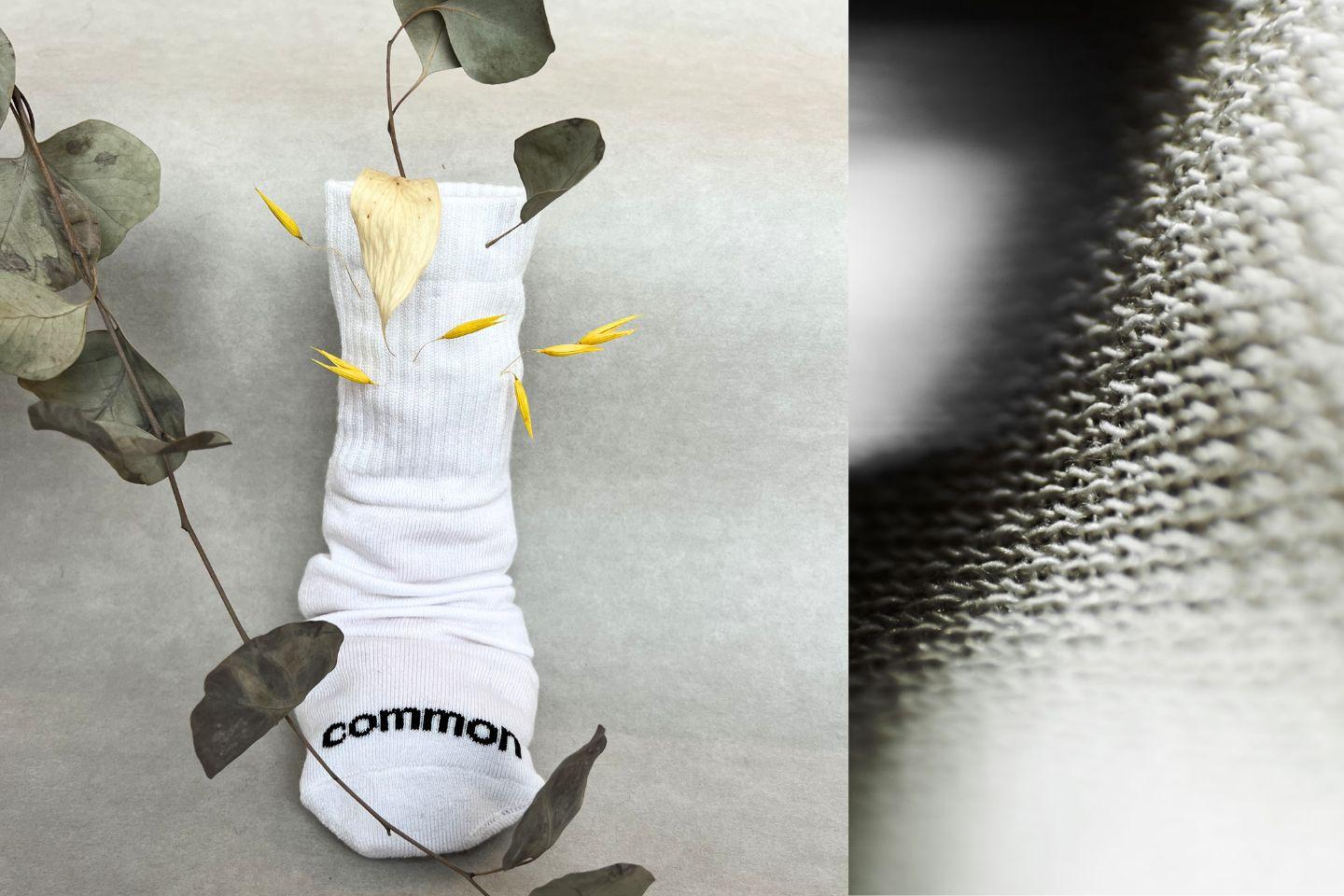
We have raised awareness about them long enough. Head for the materials insights article mentionning the best out there. Tencel™ lyocell is our favourite. Made from eucalyptus wood pulp, just like paper, this plant-based fibre is processed using an organic solvent to extract the cellulose from the wood and is spun using jet-wet technology. This solvent-spinning process recycles process water and reuses the solvent at a recovery rate of more than 99%. Unlike polyester, it comes from renewable, regenerative trees rather than a barrel of crude oil.
And when it comes to its end of life, the gap only widens: polyester, being plastic, will persist in landfill or ocean for centuries. Tencel™, by contrast, will biodegrade, even in compost, closing the loop entirely.
The good news? This is a choice you get to make every time you shop. Flip the label before you flip for the style — skip the blends, and choose fibers that give back rather than just break down. And when polyester is what you're after, buy it secondhand; it already exists in abundance, so there's no need to make more. Small choices, repeated often enough, are how industries change.
Discover our eucalyptus fiber products :